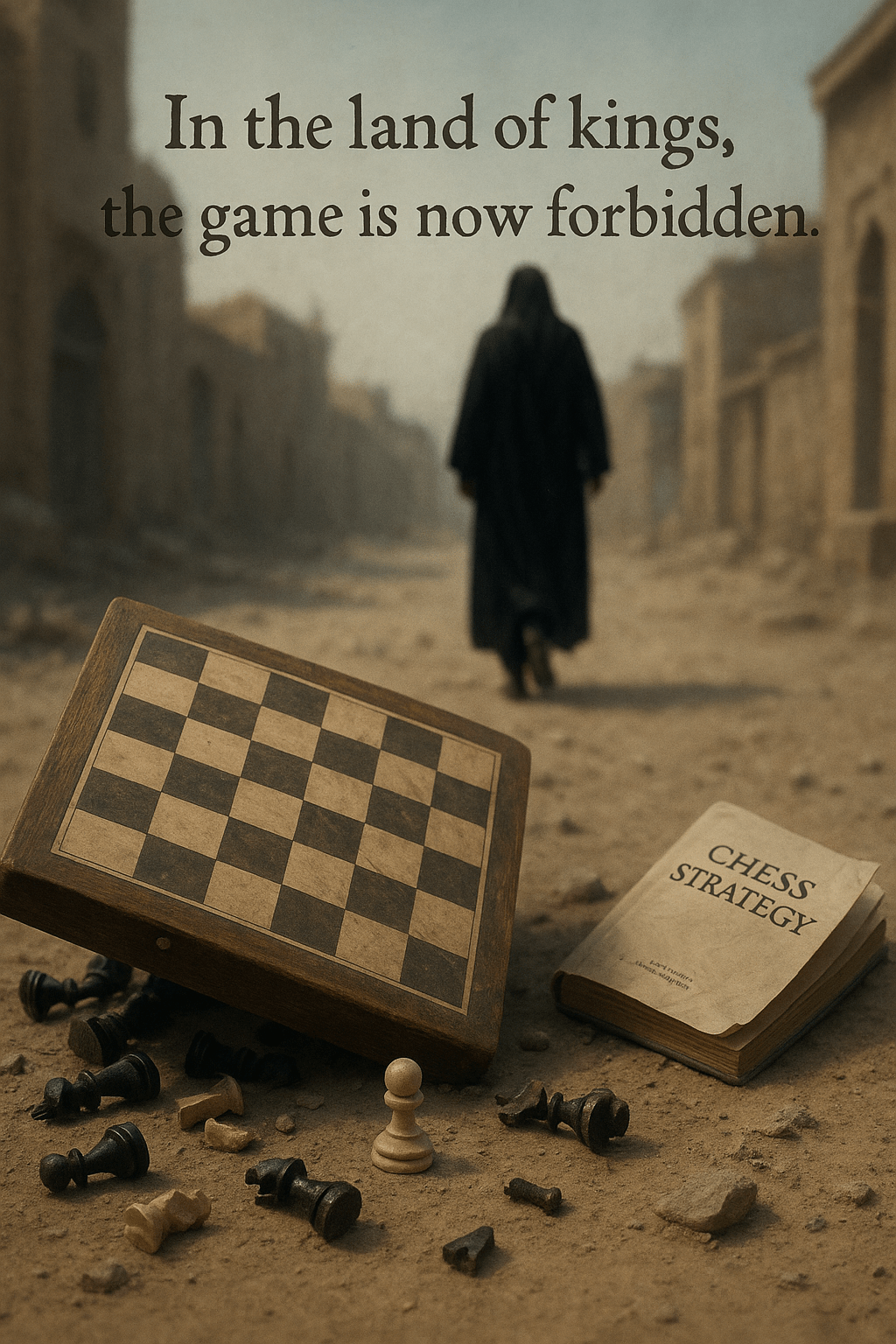
This past week, the Taliban announced a ban on chess across Afghanistan, citing religious concerns. For those of us who grew up learning life lessons over a 64-square board, it’s a chilling headline—but it’s about more than a game.
It’s Not Just a Ban—It’s a Blow to the Mind
Chess isn’t simply entertainment; it’s a workout for the brain. Strategy, patience, foresight—these are skills developed over years, sometimes passed down from parent to child. To take that away is to rob a generation of a mental and emotional outlet, especially in a country already deprived of many educational resources.
The Human Side of the Board
In Afghanistan, chess has long been a quiet refuge. A low-cost, accessible game played in homes, schools, tea houses, and even refugee camps. For young people, it was an escape. For communities, it was connection. For women—especially under regimes that restrict public life—it was one of the few games they could safely play indoors. This ban closes another door on opportunity, expression, and human connection.
The Global Silence and Our Role
The international chess community has begun to speak out. But the truth is, most people won’t hear about this unless we talk about it ourselves. And we should.
Not just because we care about chess.
But because we care about why people play it in the first place.
Want to help?
Spread the word. Write to chess federations. Share this story. Or just play a game in solidarity. Every pawn has power, if it keeps moving forward.
— Pawn Social Club
We play for more than just a win.

Leave a comment